I am not going to mention poverty, drought and starvation. Nor unemployment, high inflation and corruption. I shall not discuss disease, malnutrition and infection. And forget about genocide in Dafur and the fact that Sudan is considered to have "The most repressive regime in the world". Let's put all of that aside, and for now, focus on some of the warmest and most hospitable people in Africa. Where it is common to be invited into someone's home to share a meal, or have a glass (or 5) of tea.
Last night, it felt exactly that way. Essentially, we were welcomed into Hamar's dining room, and overwhelmed by his hospitality and joy in serving us food from his native Sudan. Hamar arrived in Australia 18 years ago, taught himself how to cook, and opened Umdorman Cafe in Moorooka (see week 3 blog: Ethiopia for suburb profile). Through the Australian Humanitarian Programme and the UNHCR, Australia has given 19,050 people from war-torn Sudan a new home and a second chance. Moorooka is often called "Little Africa", or "Africa Town" and evolved to reflect the profile of its demographic, with most of Brisbane's 1,805 Sudanese residents settling in this suburb.
Being the hub of African refugee re-settlement, it was not surprising to be the only Caucasians in the restaurant. Umdorman is clearly popular with the local Sudanese community, many gathering there after work to watch the ABC World News on the wall mounted television, and enjoying a hearty, familiar meal. Our arrival must have disrupted their usual Friday night routine, as the regulars inconspicuously left the room, one by one, and continued their gathering outside on the pavement. Soon we were the only people in the restaurant, and had our own private banquet!
Bil-hana' wa ash-shifa! (enjoy your meal)
At Umdorman, one would usually order from the array of dishes in the bain marie at the kitchen counter. Hamar would have none of that, and insisted on serving us at the table. He arrived with two dishes: Gewerma (a traditional diced lamb dish with onions) and Kebab Tawa (a local favourite lamb dish with beans) and two huge plates of rice. The flavours were subtle, and the lamb cooked beautifully tender. Halfway through, he arrived with two more dishes: Bamia (an okra stew) and Molokhia (similar to spinach, but with a slippery consistency) and more rice. By now the table was laden with food, but that did not stop our host from bringing three more dishes: Kebab Hallah (lamb curry), a delicious eggplant braise, with onions and capsicums accompanied by some flat bread (kisra) and a lentil stew. Noticing the Gewerma bowl was empty, he quickly replaced it with a full one. The evening reminds me of Sunday lunch at my parent's place, where the food just keeps on coming, and the end is never in sight. We thoroughly enjoyed being there, yet again in an environment far removed from the glam of the designer dining in the city. The food is honest and simple, tasty and healthy. Umdorman is a Halal establishment, which implies that serving alcohol is forbidden. I was therefore reluctant to take a bottle of wine and being served 40 lashes (the penalty for consuming alcohol under Sharia Law) instead of a meal, but fortunately this is Australia, where Sharia Law does not apply, and Hamar was more than happy for us to have wine and beer at his table.
Nielen formulated a new rule a couple of weeks ago (for rules see week 1 blog): Rule 6 - The sharing of facts can only commence once food is served. As he himself broke the "obligatory attendance" rule last night, we disregarded his new rule, and pretty much started babbling about Sudan the moment we sat down. Phil and Martina, our ever faithful accomplices, contributed with ardent enthusiasm. Man has lived in Sudan for at least 30,000 years, and the valley of the Nile is often referred to as the "Cradle of Civilisation". Situated in Northeast Africa, Sudan is the largest country on the African continent (if you include the recently independent republic of South-Sudan), with a vast flat desert and vicious sandstorms to the north, and a mountainous sub-tropical region to the south. Umdorman is one of three sister-cities located at the confluence of the Blue and White Nile rivers. Home to the largest market in Sudan (The Soug...a vibrant and lively destination for shoppers) Umdorman is the youngest city of the three, built on the northwest bank across the White Nile, with the capital Khartoum situated on the south bank of the Blue Nile. The centre of Khartoum is a clear remnant of the British Empire, with the street plan laid out in the shape of the Union Jack, resulting in terrible gridlock all day long.
Being a remnant of the British Empire is about the only thing we have in common with Sudan. It is difficult to find a country where the British did not leave their mark...which leads us to our next stop...untainted by interference from The Empire: Brazil!
 Local resident outside Umdorman
 Every day fare
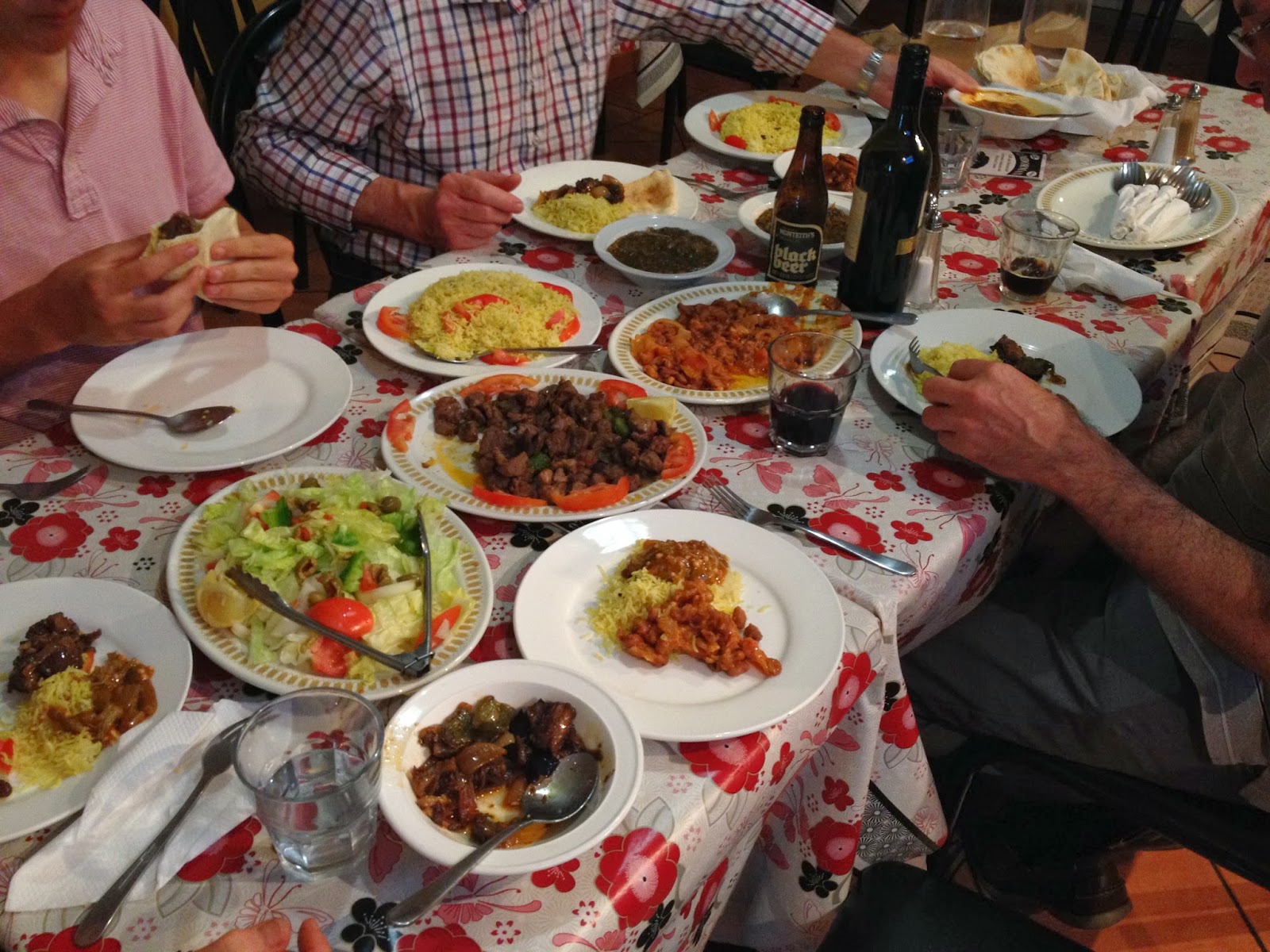 and that's not all of it yet...!
 we did well.
No comments:
Post a Comment